


Fanning the Flames: The U.S. Supreme Court, Conversion Therapy & the Future of American Healthcare
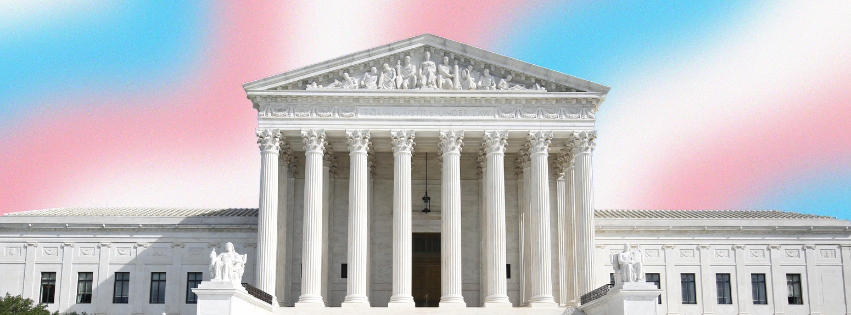
On Trans Day of Visibility, the U.S. Supreme Court released its long-awaited decision in Chiles v. Salazar. While this case directly considered a ban on conversion therapy for minors, the majority opinion instead framed it as an issue of free speech rather than LGBTQ+ rights. In her dissenting opinion, Justice Jackson warns that this opinion will lead to unknown consequences for our health and wellbeing – not just for LGBTQ+ people, but for all Americans.
What is conversion therapy?
Conversion therapy is a widely discredited and harmful practice, intended to change someone’s sexual orientation or gender identity to conform with heterosexual and cisgender norms. It is opposed both in the United States and internationally. Nearly every major medical and mental health organization in the United States has condemned the practice, including the American Psychological Association, the American Psychiatric Association, the American Medical Association, the American Academy of Pediatrics, and the American Counseling Association. The United Nations deemed it a form of torture and has recommended worldwide bans. According to the Trevor Project, LGBTQ+ youth subjected to conversion therapy are more than twice as likely to attempt suicide or to report suicide attempts.
What happened in Colorado?
In 2019, Colorado legislators passed the Minor Conversion Therapy Law (MCTL) to prohibit conversion therapy being imposed on LGBTQ+ youth. The MCTL prohibits licensed counselors from engaging in “conversion therapy” with minors. It defines conversion therapy as “any practice or treatment…that attempts…to change an individual’s sexual orientation or gender identity,” or any efforts to “change behaviors or gender expressions or to eliminate or reduce sexual or romantic attractions toward individuals of the same sex.” The MCTL explicitly permits counselors to affirm and support a minor’s identity exploration and development, or to assist their gender transition.
Kaley Chiles is a licensed professional counselor in Colorado who only engages in talk therapy. As a practicing Christian, she “believes that people flourish when they live consistently with God’s design, including their biological sex.” While the MCTL already provided an exception for therapists engaging in religious ministry, Chiles brought suit to challenge the law, arguing that it infringed on her rights to free speech and used her “as a tool to impose the government’s biased views on her clients.”
Chiles was represented by the Alliance Defending Freedom (ADF), a conservative Christian legal advocacy group opposing LGBTQ+ rights. ADF has previously argued against LGBTQ+ rights and transgender equality in 303 Creative LLC v. Elenis, permitting private business to discriminate against LGBTQ+ individuals, and National Institute of Family and Life Advocates v. Becerra, making it harder to legally regulate crisis pregnancy centers.
What did the Court hold?
While the underlying law is about conversion therapy, the majority decision focused on whether the MCTL infringes on free speech and counselors’ freedom from viewpoint discrimination. The majority opinion, written by Justice Neil Gorsuch, held that the Colorado law does not merely regulate a counselor’s “conduct,” “treatment,” or therapeutic modality,” but dictates the views a counselor may express. Viewpoint discrimination, under United States law, is rarely permissible and is subject to strict scrutiny, a heightened level of analysis. Justice Gorsuch ultimately wrote that the MCTL needs to be assessed under a heightened analysis. The case was remanded to a lower court to assess the challenge under strict scrutiny – which will likely mean that the MCTL will be struck down, as well as other conversion therapy bans in the future.
In Justice Kagan’s concurring opinion, joined by Justice Sotomayor, she wrote that the MCTL likely constitutes viewpoint discrimination. However, in her brief concurrence, she wrote that future bans must be carefully written to survive constitutional challenges.
What did the dissent say?
“Ultimately, because the majority plays with fire in this case, I fear that the people of this country will get burned.” In a scathing dissent, Justice Jackson emphasizes that this case is not about free speech, or even LGBTQ+ Americans – but instead fans the growing flames of medical misinformation and weakens state powers to regulate healthcare.
Justice Jackson read portions of her dissent aloud from the bench, signaling her grave concerns. She emphasized that talk therapy is a medical treatment, rather than an expression of a provider’s own speech or beliefs. By protecting conversion therapy as a provider’s “viewpoint,” the Court has blurred the standards of care and the ways that states can regulate healthcare. Justice Jackson is clear that, regardless of the majority’s motivations, this decision will have far-reaching consequences. “Before now, licensed medical professionals had to adhere to standards when treating patients: They could neither do nor say whatever they want…Americans have been privileged to enjoy a long and successful tradition of high-quality medical care. Today, the Court turns its back on that tradition.”
She leaves readers with a stark warning. “[T]he Court could be ushering in an era of unprofessional and unsafe medical care administered by effectively unsupervised healthcare providers. A state license used to mean something to the patients who entrust their care to licensed professionals—i.e., that the person is certified to be one who provides treatments that are consistent with the standard of care. That stops today.”


About Post Author
